September 22, 2026
London Live Wrap Up: The Human Edge
What three founders and a Tour de France winner taught a room full of investors about judgement
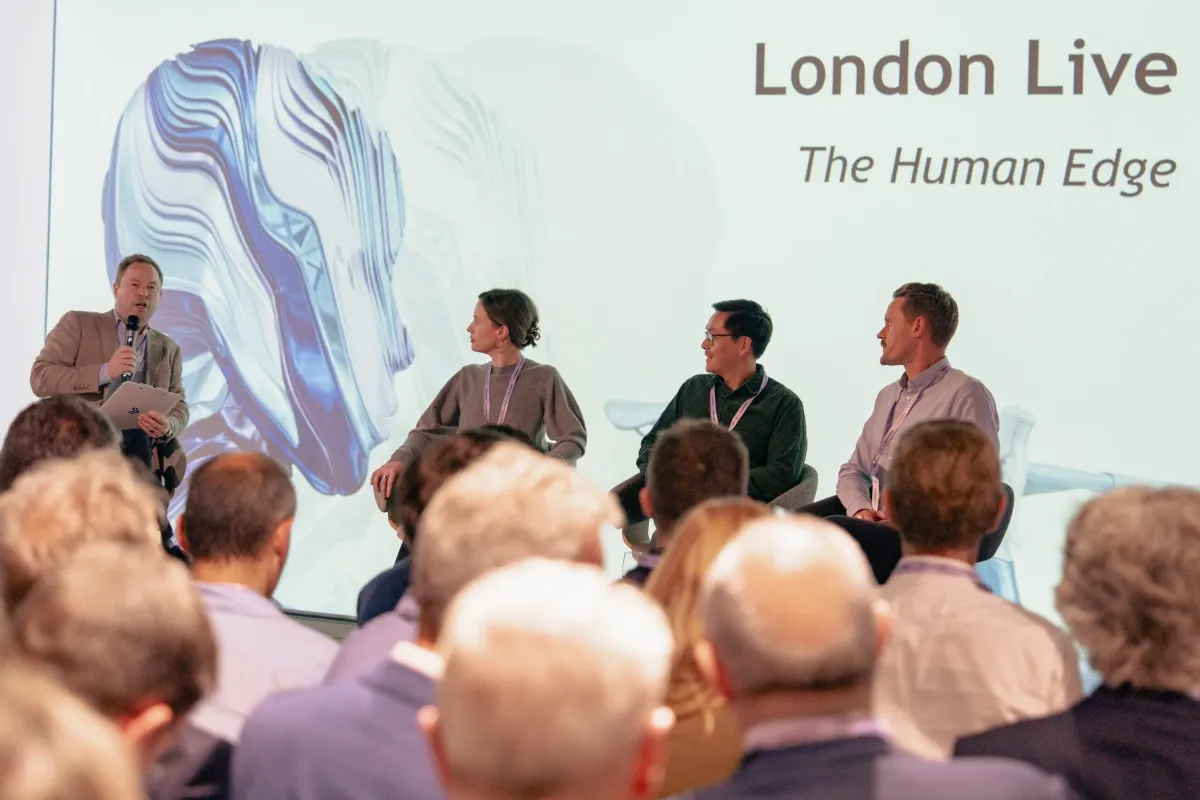
Everyone at the moment is arguing about what AI will take from us. At our London Live last week, the room spent two hours arguing about what it can't, making it more convincing than any AI panic headline we’ve seen this year.
Founder Panel
The evening opened with three founders, and the consensus among them was oddly uniform for people building three distinctly different businesses. Fiona Jelly of ComplyFirst put it plainly, AI now handles 80 - 90% of the process in compliance automation, but the sign-off stays human, because her clients are personally liable heads of compliance and no one is delegating that risk to a model. She raised the recent Revolut and Irish government agency KYC breach as the cautionary tale of the year. A real email domain doesn't mean a request is real, and the next cyber attacks will be AI voice agents, not phishing emails. Her fix is refreshingly analogue, a 2FA-style callback to switchboard before anything gets actioned.
Jing Ouyang, now on his second company after Patchwork, made the more uncomfortable point that the skills gap isn't coming, it's already here, and the window to close it is short. Agentic coding has collapsed his feedback loops so completely that he's redesigning his company's architecture from scratch, not bolting AI onto an old org chart. Hugo Soul from Unbox offered the clearest heuristic of the night, borrowed from his work automating brand safety audits for clients like P&G and Unilever. His take is to find the 90% AI can handle with confidence, and guard the 10% that decides someone's livelihood. Boards want the growth that comes from new channels but they are not willing to hand the judgement calls to a model, and neither is he.
Strip out the specifics and a shared thesis emerged from our founders; the more processes are automated, the more the remaining human decisions matter, and the more expensive it becomes to get them wrong. Relationships still get built over a shared meal, not a Slack thread with an agent in it. Taste still separates the founders willing to take an asymmetric bet from the ones optimising toward the model's lowest common denominator. In a world where anyone can build anything for a fraction of the cost, the people who can sell and hold a buyer relationship are the ones with the edge. As Fiona so eloquently put it, information is in abundance now but wisdom isn't.
Geraint Thomas - The 10X Human
Then Geraint Thomas took the stage for a fireside chat that, on paper, had nothing to do with venture and, in practice, was the whole point of the evening. Three World Championship golds, two Olympic golds, a Tour de France win, and he still rode most of his career with his Garmin on sleep mode. His reasoning was such that how you feel doesn't necessarily equal performance, and data can cap belief before the legs get the chance to prove it wrong. He told the story of sitting on former World and Olympic Champion, Filippo Ganna's bed before a time trial stage, after Ganna had been shown data saying he couldn't win it. He told him to go for it anyway. Ganna won. The lesson wasn't anti-data, it was that the full picture isn't always the useful picture.
His read on resilience was the line the room will keep quoting, as soon as you accept life isn't fair, you'll be fine. He credited psychologist Steve Peters with that one, and it explains a lot about how he talks about younger riders now, the ones who expect more and underestimate their own ceiling. Motivation, in his view, is overrated. Commitment is what gets you through the days where motivation doesn't show up. Regarding team culture, his answer to "how do you beat Pogacar" wasn't a training plan. It was that you don't, man for man. So you build a team that's ready the moment he isn't perfect, and you protect the standards that keep that team believing in each other. The moment standards slip, the whole culture slides with them.
Wrapping it all together
Same evening, same room, and somehow the compliance founder and the six-time world champion were making the same argument from opposite directions: automate the process, protect the judgement, and build the team. All of this will hold when the plan goes out the window, because it will.
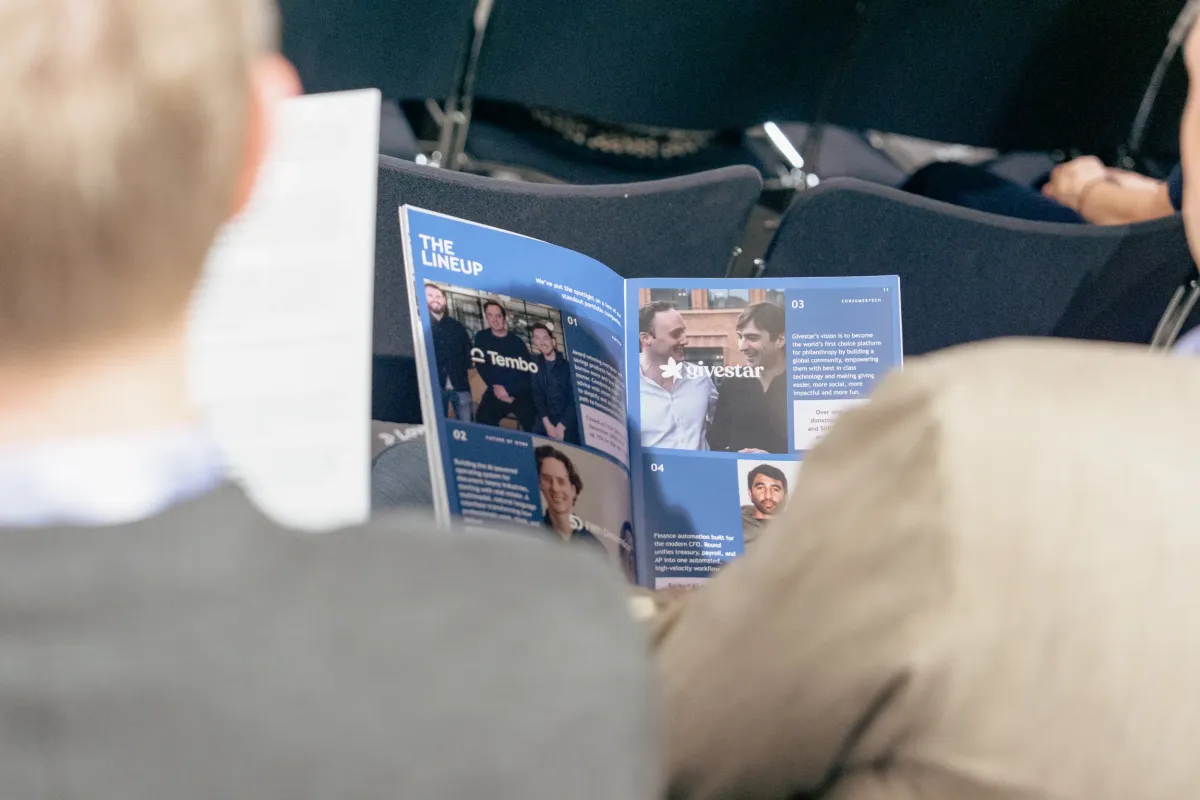
Our next EIS fund closes on 16th October, with a pipeline of 8-14 companies across fintech, future of work and consumer tech. If last week's room is any indication, the founders worth backing right now are the ones who know exactly which 10% they're not automating.