August 07, 2026
Expertise Isn’t What You Know, it’s What You Earn.
I've stopped being impressed by what people know and started paying more attention to what they've done with it.
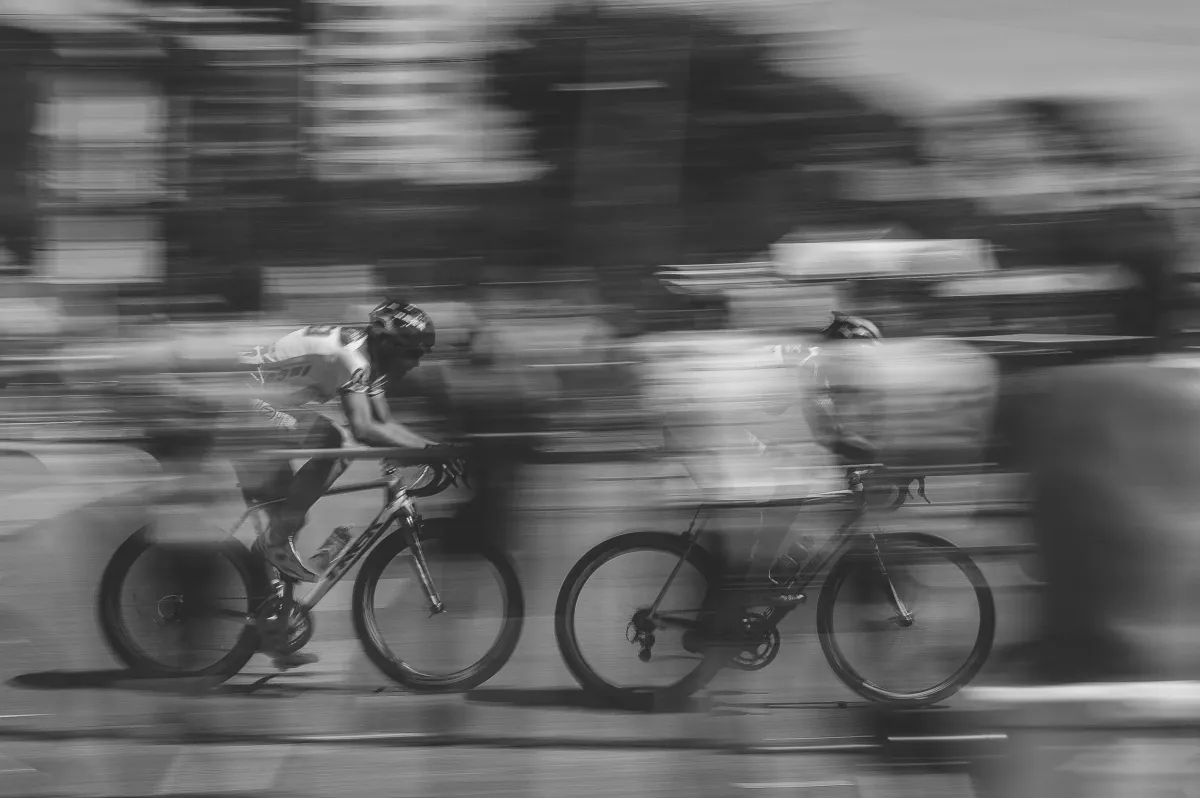
At Love Ventures, our values spell out what we stand for: Longevity, Obsession, Vocal, Expertise - L-O-V-E. Since we introduced them, each of us on the team has written a personal piece about the value that means most to us. I’ve covered all four since we launched.
Writing about Expertise feels timely. Six years into building Love Ventures, I've stopped being impressed by what people know and started paying more attention to what they've done with it.
What I’ve learned about expertise - from elite sport, the boardroom and the long game
In April, I rode 312 kilometres in a single day as part of the Majorca 312.
I’m not revealing this as some impressive stat; it’s more because it’s always been on my bucket list and because a year ago I wouldn’t have believed it was possible. Yet, completing it didn’t make me want to stop; it made me want to go bigger (watch this space in the Autumn).
That’s not talent, instead that’s expertise being built, mile by mile, year by year.
There’s a lot written about expertise as something you either have, or you don’t. I don’t think it works like that and am a big believer in the 10,000 hour rule. The people with the most expertise I’ve met in any field - founders, cyclists, investors - didn’t arrive there. They accumulated their way there, through repetition, failure and iteration.
In other words, expertise isn’t what you know. Instead, it’s what you’ve earned.
The fuel, not the fire
The most common mistake I see - in founders, in investors, in myself - is confusing knowledge with expertise. They’re related, but they’re not the same thing. Think of it like this: knowledge is the map, expertise is what you get from walking the ground so many times you no longer need it.
I’ve always been competitive, ever since I won a national sports competition at age 13. Somewhere in the decades since, I learned that competitiveness alone doesn’t produce expertise; the journey towards those 10,000 hours does. Love Ventures has given me a pathway to channel this competitiveness. Then cycling as part of Ride 25 gave me something different - a mission measured in decades, not finishing positions.
Sport as a non-negotiable
Sport has always been non-negotiable for me as it keeps me in flow. It keeps my temperament steady in a noisy world, so I can make clear decisions when everything is loud. It also gives me a competitive edge that I think matters, particularly as an emerging manager where the marginal gains - the small things you do every day that compound over time - are everything. I therefore set myself one big sporting goal each year, as I know that expertise needs somewhere to be tested beyond the workplace.
The cycling specifically grew through Ride 25 - Love Ventures is a charity partner of an extraordinary mission: cycling from the UK to Australia, 25 legs across 25 years, since 2012. I started on the Pioneers leg, then agreed to double up and join the Founders leg too. That decision (and a new bike) changed something. Those rides combine work and passion in a way that’s hard to replicate elsewhere; they’re full of founders and exited entrepreneurs, covering 300+ miles together on each leg. You learn a lot about people on a bike. How they handle the moment a climb gets harder than expected. Whether they sit up and wait when someone falls behind, or push on. After 100 miles in the saddle, there's no performance left; what you see is what you get.
I didn’t plan for cycling to become an area of expertise. It just became that way, because of the hours accumulated and the direction that Ride 25 took me.
What I look for in founders
Expertise is one of the clearest signals I look for when meeting a founder. You can feel it in a room, the moment someone stops explaining their market and starts revealing it. The energy that comes from years of lived experience in a problem, not just research about it. Their eyes light up and time disappears; you instinctively lean forward. My colleague Annabel has written about it in her piece: The Human Edge - Why Obsession Is The One Thing AI Can’t Copy.
What I’ve learned to look for, beyond that spark, is whether the expertise is proprietary and earned in a way that’s hard to replicate. In early-stage investing, we often call this founder-market fit. The founders who go the distance have accumulated expertise that competitors can’t shortcut: deep domain knowledge, hard-won distribution, an understanding of customer behaviour that only comes from years inside the problem.
Sport taught me to look for this, compounding attention on the thing that matters. The best endurance athletes aren’t usually the ones who know the most about training but the ones who’ve done the most of it.
The long game
In 2016 I took a travelling sabbatical, which I’ve written about before. What I understood only much later is that stepping back - completely back - was what gave me the clarity to start Love Ventures. The expertise was being built the whole time and the time out helped me understand what it was for.
That’s the other thing sport has taught me is that expertise and recovery are not opposites. The best athletes in the world don’t choose between pushing hard and resetting. They master the relationship between them, that mastery is what separates the ones who perform for a decade from the ones who burn bright and disappear.
The 10x Human
Geraint Thomas has been a hero of mine for years (his autobiography is a great read). What makes his story so compelling to me isn’t just winning the 2018 Tour de France, though claiming cycling’s greatest race after more than a decade as domestique for Wiggins and Froome is a remarkable demonstration of expertise accumulated quietly, over many years. Rather, it is the fact that he carried on into his late thirties, still competing at the top level, still evolving. That is what expertise looks like: not a fixed destination, but something that keeps building.
On 15th September, we’re hosting our next showcase event, London Live, around exactly this question. As AI becomes the baseline - faster research, cheaper execution, better pattern recognition - the edge no longer belongs to whoever has the best tools. It belongs to whoever has built the kind of expertise the tools can’t replicate.
We’ll be sitting down with Geraint for a conversation we’re calling The 10x Human: what preparation, instinct, and performance under pressure look like when everyone has access to the same data and tools. Alongside that, a panel of portfolio founders on where human expertise carries the highest premium right now - and where it’s eroding fastest.
It’s invite-only, but if this resonated, register via the link here. If you’re wondering where my own expertise is being tested right now, let’s just say 312 kilometres wasn’t the peak.
Photo by Maico Amorim on Unsplash